ABOUT THE SIGNALS
Our founder achieved multiple top-5 finishes across World Trading Championship divisions, including 168% verified return in the 2025 World Trading Championship. The trades themselves don't provide the edge all by themselves—or other firms could outperform benchmarks much easier—but what gives them ultimate value is using them in assets we deem tradable.
THE GRADING SYSTEM
In the product you will see a screen called "Tradable Assets" with assets ranked from A to E.
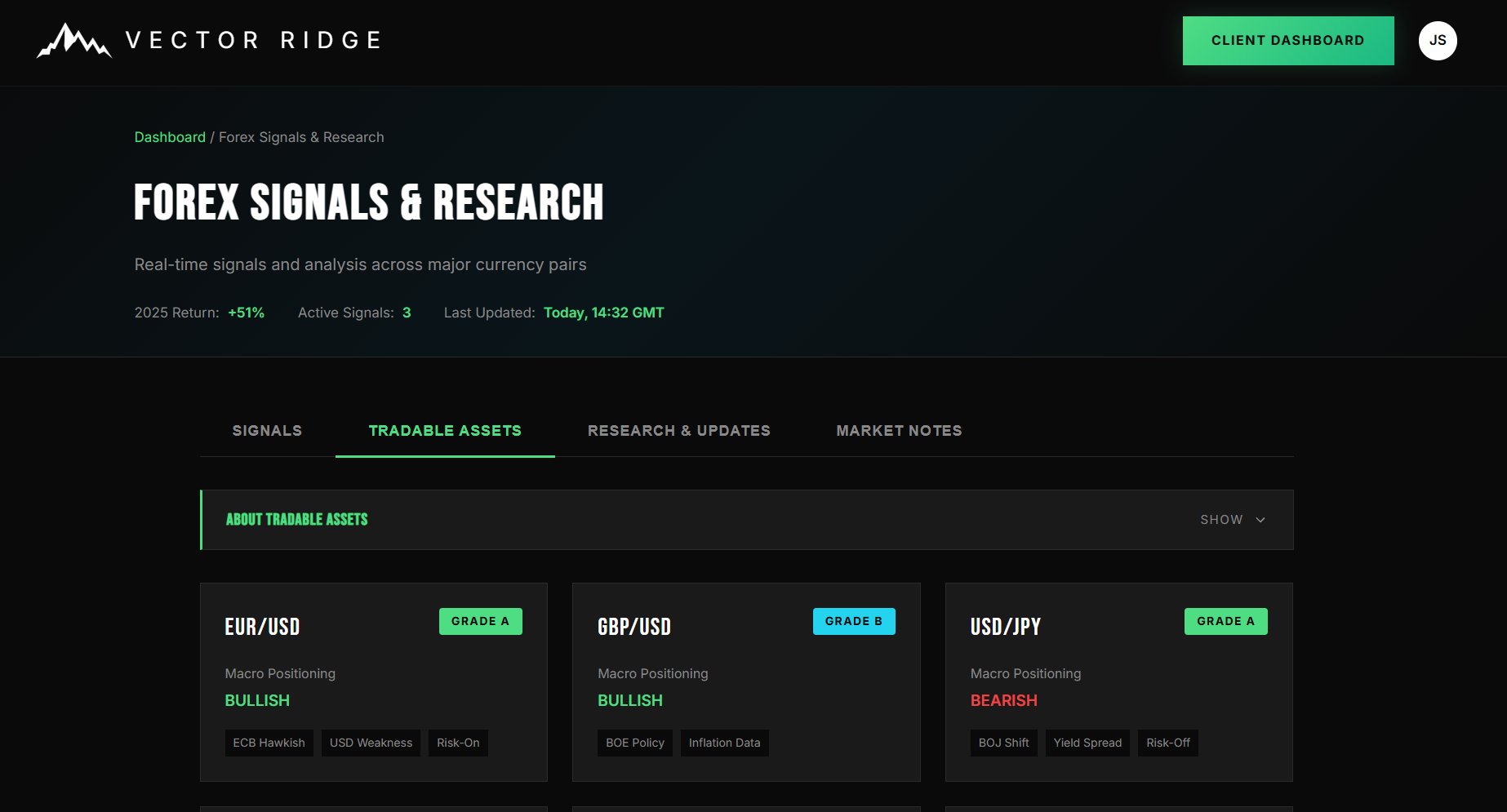
All assets are tradable with our algorithm which does provide alpha by itself, but the most profitable way to use these is to combine them with a discretionary and mathematical approach.
Grade A — Highest Conviction
Requires both mathematical and discretionary criteria. Trade with minimal or no stops.
Grade B — High Conviction
Strong setup but missing one criteria. Trade with tighter risk management.
Grade C — Moderate Conviction
Tradable but with notable caveats. Reduced position sizing recommended.
Grade D — Low Conviction
Potential pitfalls or unpredictability. Only for experienced traders.
Grade E — Avoid
Unfavorable conditions. Do not trade this asset currently.
An asset requires 2 criteria to be Grade A: a mathematical signal AND a discretionary macro decision.
Example: Gold in 2025
From a mathematical signal point, Gold has been tradable since September 2025. Paired with a simple macro decision of weakening USD and hyperinflation concerns, Gold became Grade A.
Regardless of the specific signal we give you, Gold was on an upwards trajectory since being labeled Grade A.
Why Grade A Changes Everything
When an asset is Grade A, you can do things a bit differently—such as no stops—because you don't mind owning the asset. Once you have stops involved, your chance of a winning trade is absolutely diminished.
To be profitable you need 2 things right: timing and direction. Our trades help with timing, but if that slightly misses, a stop will make a winning trade become a losing one.
For Grade A trades, I suggest no stops or minimal stops. Sell when either the asset breaks trend or you get an alert from us that the asset is no longer Grade A. This is the most mathematically probable way to secure alpha.
This means certain assets you may have to forego trading. For example, BTC will never be Grade A because you can't realistically sit and hold it compared to Gold, NVIDIA, or Google.
Quality Over Quantity
It is far better to do a few trades that are correct than a lot with a lower win rate—because you can just increase your sizing on your fewer sure bets.
Win rate is not everything. You can have a win rate of 80% with an average profit of 1% per winning trade, but if a losing trade is -5%, you result in a net loss.
Depending on market conditions, Grade A can be rare in some months and plentiful in others. If only 3 Grade A trades occur a month and you make an average 3% profit each—that's 9% monthly or 108% annually. This absolutely destroys hedge fund metrics, market makers, and institutions.
If you are a new trader: Please trade Grade A only and focus very carefully on your few trades a month. You will be profitable that way.
HOW TO EXECUTE
Each morning (US time) before market open, you will receive signals via email and the Vector Ridge app. They will include:
- Market entry price
- Exit/reduce price
- Asset grade
You will then log onto your broker and set a buy limit at a price around the trade we give you, and a sell order at the exit price.
Example 1: Gold
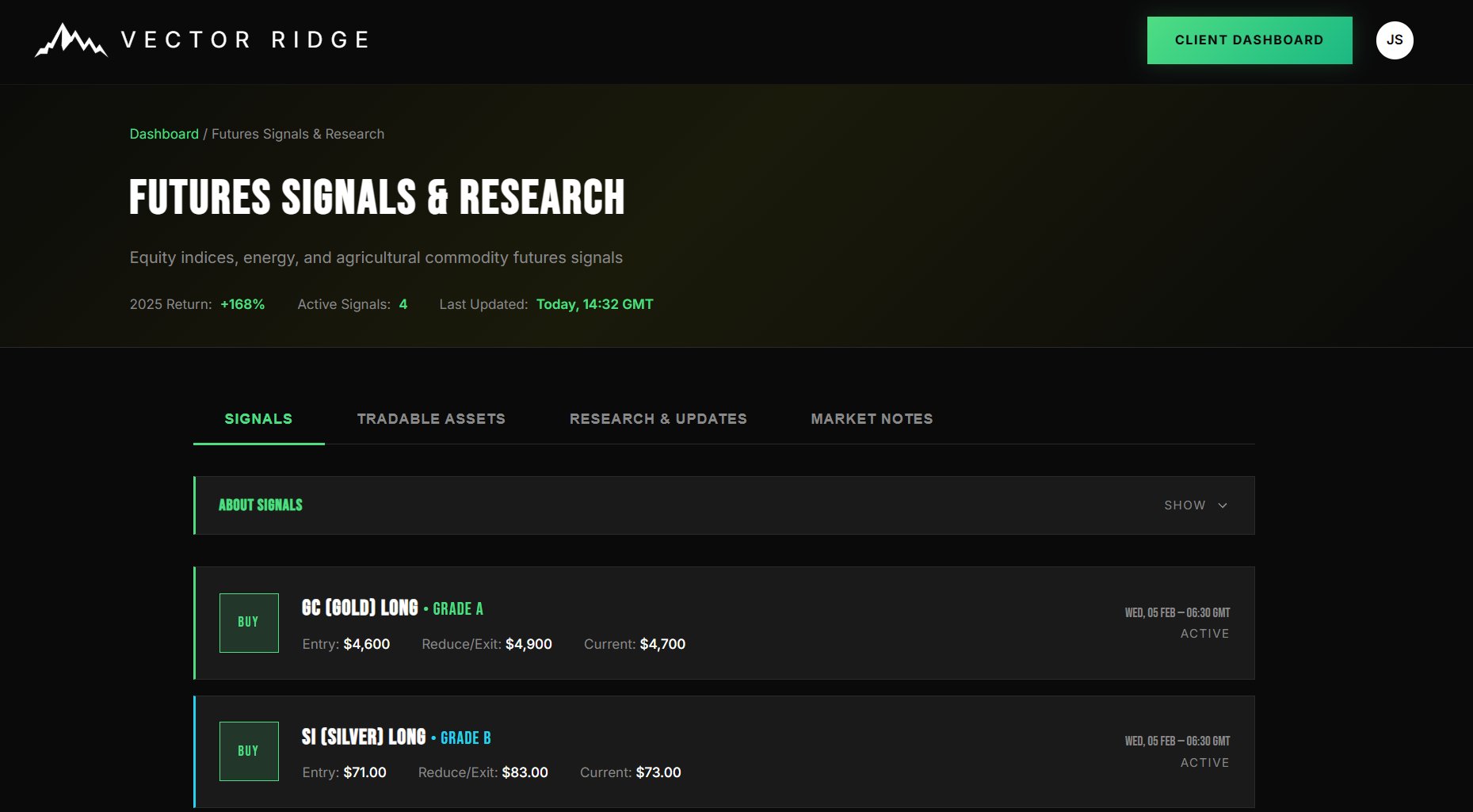
You log onto your broker and set a buy limit at 4600. Gold hits 4600, your account buys, then it hits 4900 intraday—selling a bit and bouncing in the 4700-4800 range.
Day 2: You receive a trade of 4650 entry, exit 4970. You buy at 4650 and it doesn't hit 4970. It closes at 4800—you hold.
Day 3: New exit signal comes at 5200. You update your sell to 5200. That is the new upper range to sell at—forget about yesterday's signal, it's over. You continuously update your sell price each day with our setup while you are in the position.
You can decide to sell a bit, exit the whole position, or sell nothing. The exit signal provides when liquidity comes in at resistance. If you are comfortable going fully long a Grade A asset, you can leave it until it breaks trend (your discretion) or we notify you that it is no longer Grade A.
Example 2: USD/JPY
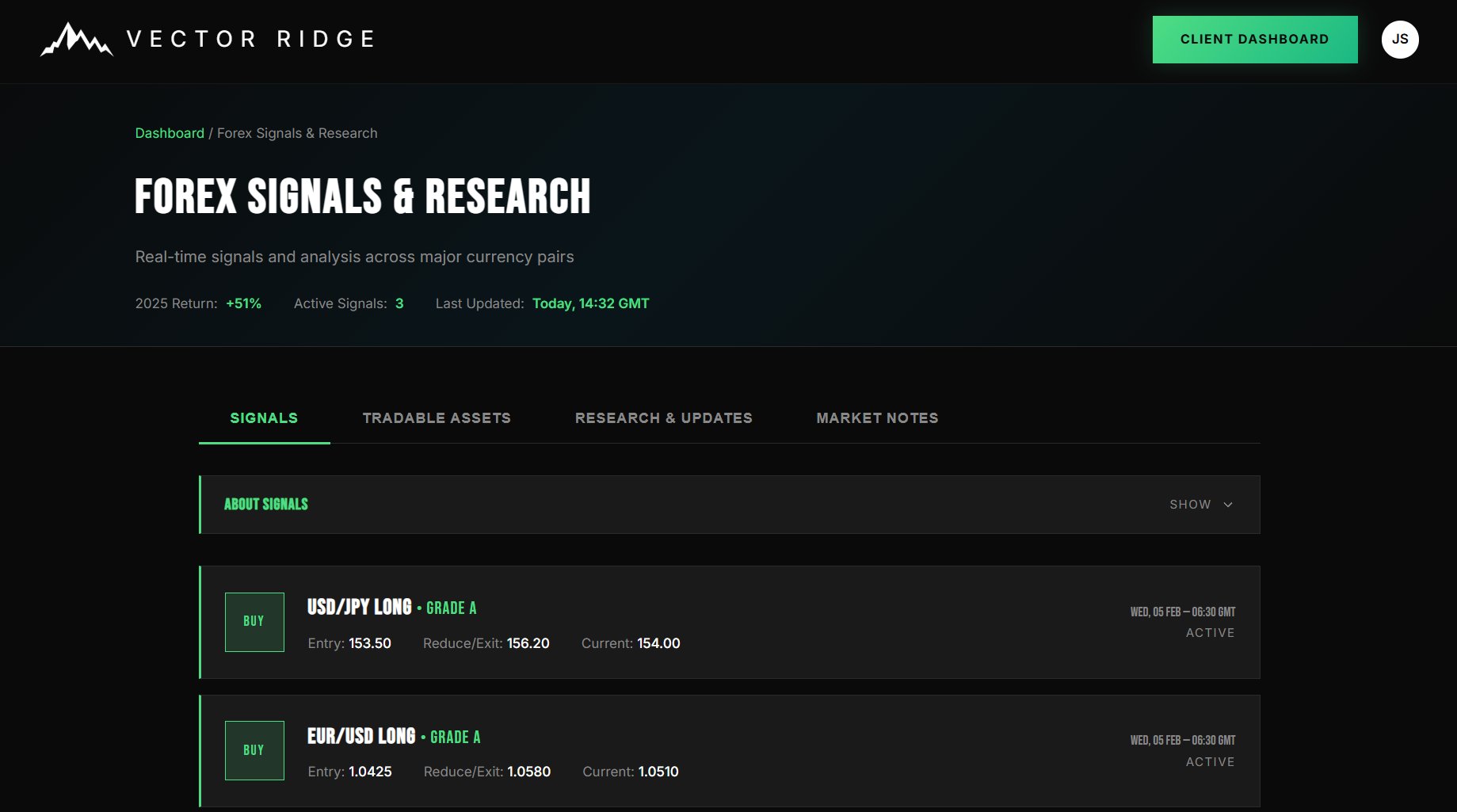
You set your buy limit of 1 lot and sell price of 0.2 lots at 156.2. USD/JPY hits both prices and finishes the day at 157.2. You currently own 0.8 lots at 157.2.
Day 2: Signal: buy 155.3, sell 158.4. USD/JPY stays in the middle range, touching neither. Finishes at 156.1.
Day 3: Signal: buy 154.3, sell 157.2. USD/JPY touches neither, finishes at 154.8.
Day 4: Alert—USD/JPY downgraded to Grade B with explanation. Buy 153.1, sell 156.3. You are now in no man's land in the middle of the trade at 154.8. You should exit the trade with your profit.
Example 3: NVIDIA
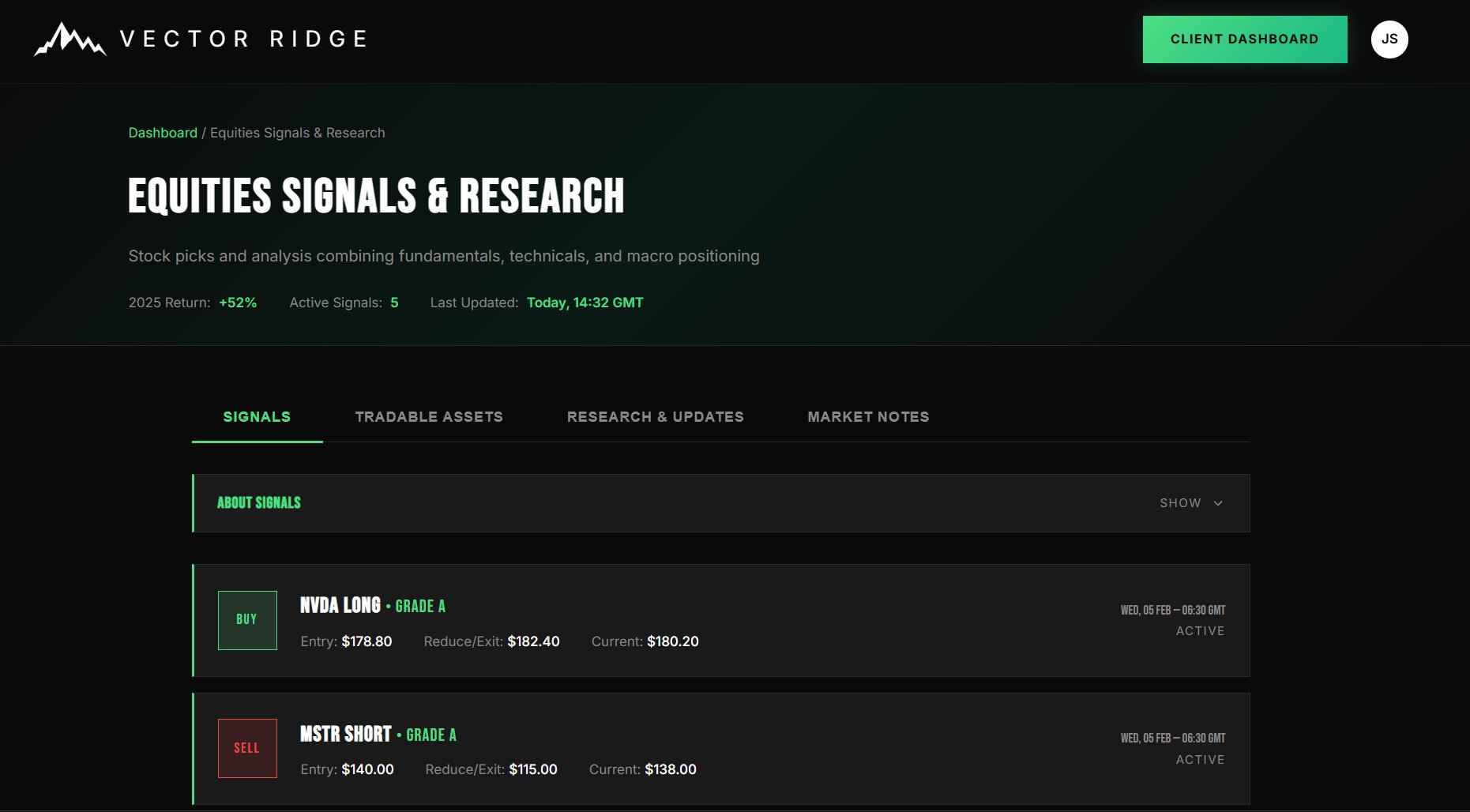
It hits 178.8 and bounces to 181.3. You have 100 shares.
Day 2: Alert: buy 179, sell 184.1. It goes to 179 and back to 183. You buy an additional 50 shares.
Day 3: Alert: buy 179, sell 186. It hits 179 again showing resistance to that number. You don't have to buy but can add a small amount (e.g., 10 shares) or none as you already have 150 shares. Price closes at 180.
Day 4: Buy goes to 177, sell 181. As Grade A, you can decide to keep owning it or trim since you're now in middle of range.
HOW TO USE RESEARCH
In each product there is a Research tab.
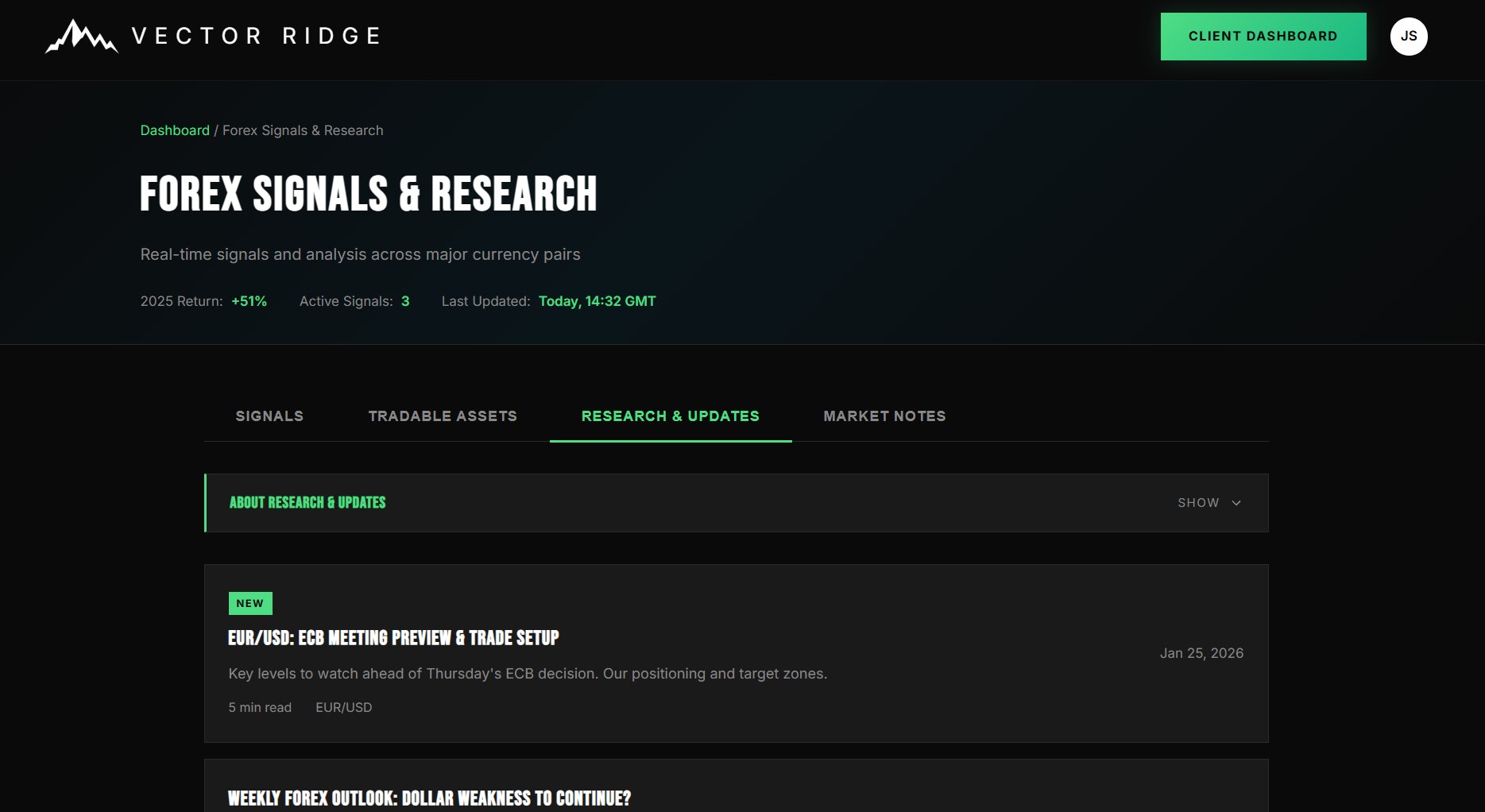
This contains reasoning and articles explaining why an asset is considered Grade A, B, etc. This provides you autonomy to determine if our choice is worth following and aids your trading process.
HOW TO USE MARKET NOTES
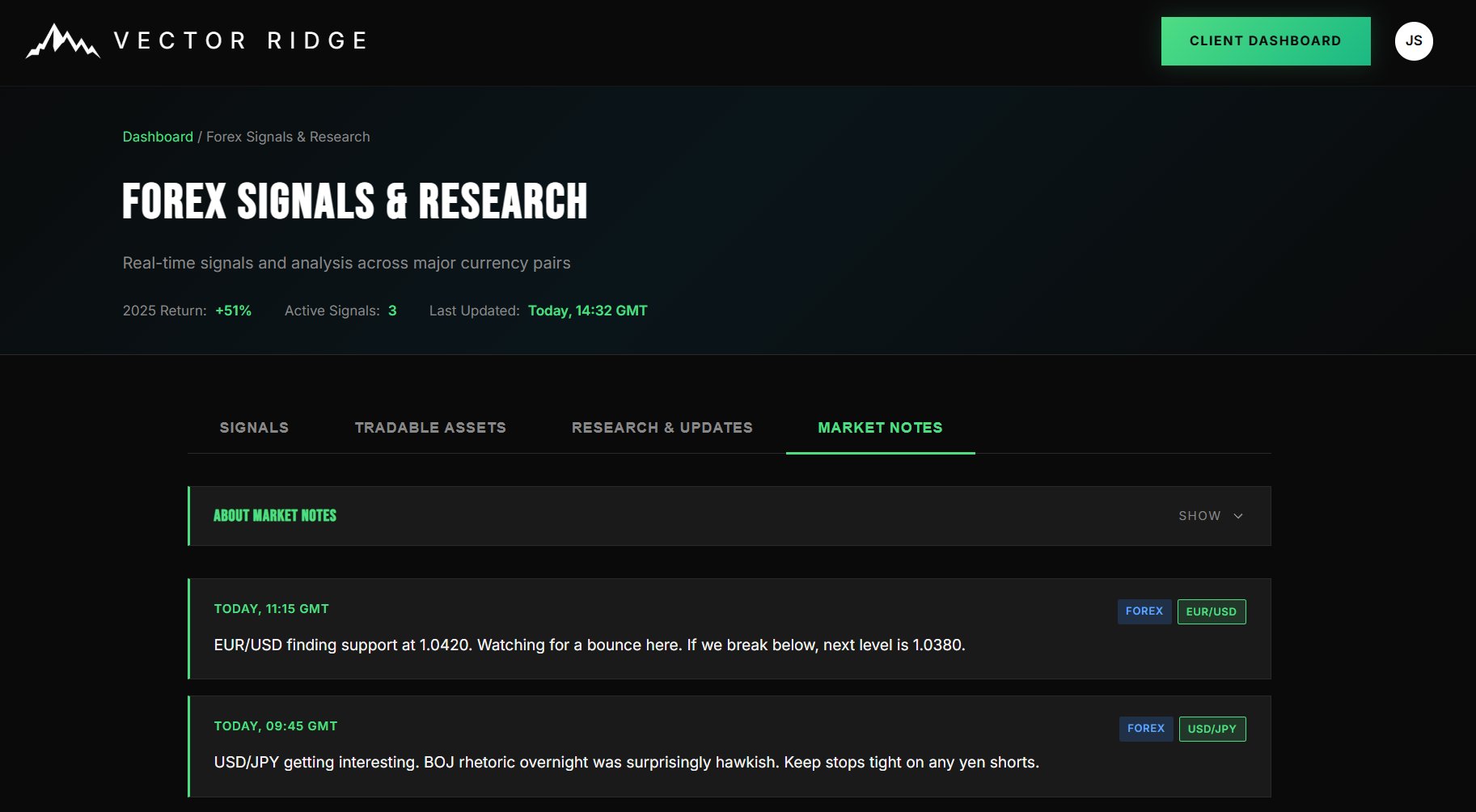
Throughout the day, key moments will catch my eye that extend beyond the trades and grades. These are shared as Market Notes—for example: "Gold and silver are blowing up today, stay away from them."